


Managing money wisely in Nigeria is no small feat. Between rising food prices, unpredictable fuel costs, and daily expenses, many Nigerians struggle to make their salary last till month-end. The truth is, the problem often isn’t how much you earn — it’s how you manage it. (How to Create a Realistic Budget That Actually Works in Nigeria (2025 Guide)).
A realistic budget helps you control your spending, save consistently, and prepare for emergencies — even with a modest income. In this guide, you’ll learn how to create a budget that actually works in Nigeria, step-by-step.
Why Budgeting Matters More Than Ever in Nigeria
Inflation, Naira depreciation, and economic uncertainty have made budgeting a survival skill. Without a plan, you’ll find yourself borrowing before payday or dipping into savings.
A proper budget gives you:
- Clarity: You see where your money goes.
- Control: You decide what’s necessary and what’s not.
- Confidence: You can plan for goals like rent, school fees, or even jollof rice for Christmas without stress.
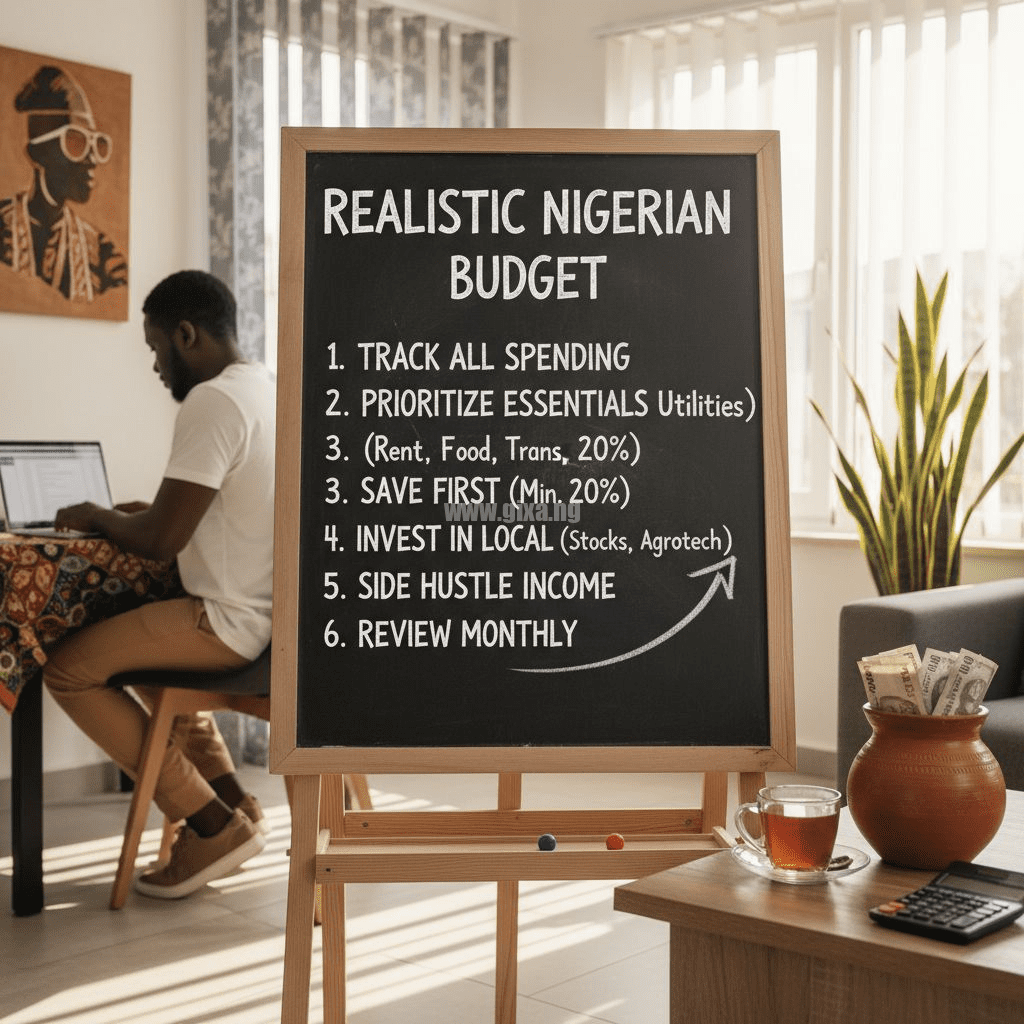
Step-by-Step Guide to Creating a Realistic Budget
Step 1 — Know Your Monthly Income
Start with your total take-home income. This includes:
More Read

- Salary after tax and deductions.
- Side hustles or freelance income.
- Passive income (e.g., rent, dividends, etc.).
👉 Pro Tip: If your income fluctuates, use your average income from the last 3 months.
Step 2 — Track Your Expenses
For two to four weeks, write down every single expense — from transport to shawarma. You can use apps like Toshl, Money Manager, or a simple Excel sheet.
Categorize your spending into:
More Read

- Essentials: Rent, food, electricity, transport.
- Non-essentials: Subscriptions, eating out, data bundles.
- Savings/Debt: Contributions to savings or debt repayment.
This helps you identify where the leaks are.
Step 3 — Apply the 50/30/20 Rule (Nigerian Version)
A classic budgeting formula adjusted for Nigerian realities:
- 50% — Needs: Rent, food, bills, transport.
- 30% — Wants: Entertainment, eating out, self-care.
- 20% — Savings & Goals: Emergency fund, investments, debt repayment.
If 50% isn’t realistic due to high living costs, try 60/25/15 — flexibility is key.
Read: Top 10 Money Habits Every Nigerian Should Master Before 30
Step 4 — Prioritize and Cut Costs
If your expenses exceed your income, it’s time to make choices.
- Cook more, eat out less.
- Review subscriptions: Cancel ones you don’t use.
- Buy in bulk: Groceries are cheaper in quantity.
- Use public transport or carpool.
Small lifestyle tweaks add up quickly.
More Read

Step 5 — Automate Your Savings
Set up automatic transfers the moment your salary drops. Apps like PiggyVest, Cowrywise, and Kuda make this easy.
Out of sight, out of temptation — that’s how savings grow.
Step 6 — Review Monthly
At the end of each month, review your progress.
- Did you stay within your limits?
- Did you overspend on “wants”?
- Can you increase savings slightly next month?
Budgeting isn’t about restriction — it’s about awareness and adjustment.
Budgeting Tools Nigerians Can Use in 2025
Here are a few trusted tools:
- PiggyVest – for automatic savings & goals.
- Kuda Bank – for spend tracking and zero fees.
- Money Manager App – for expense categorization.
- Google Sheets – for a customizable budget template.
These tools simplify the process, making it easier to stay consistent.
Common Budgeting Mistakes to Avoid
- Ignoring small expenses — they add up fast.
- Budgeting only once a year.
- Forgetting irregular expenses (birthdays, car repairs).
- Not saving for emergencies.
- Treating budgeting like punishment.
Remember: your budget is a plan, not a prison.
Final Thoughts — Make Your Budget Work for You
A budget that works isn’t about perfection; it’s about progress. Start small, track often, and be honest about your habits. With discipline and the right tools, you’ll build financial control — no matter your income level.
Disclaimer: Kindly note that the above suggestion is not in anyway, a professional advise. User’s discretion is advised.


